
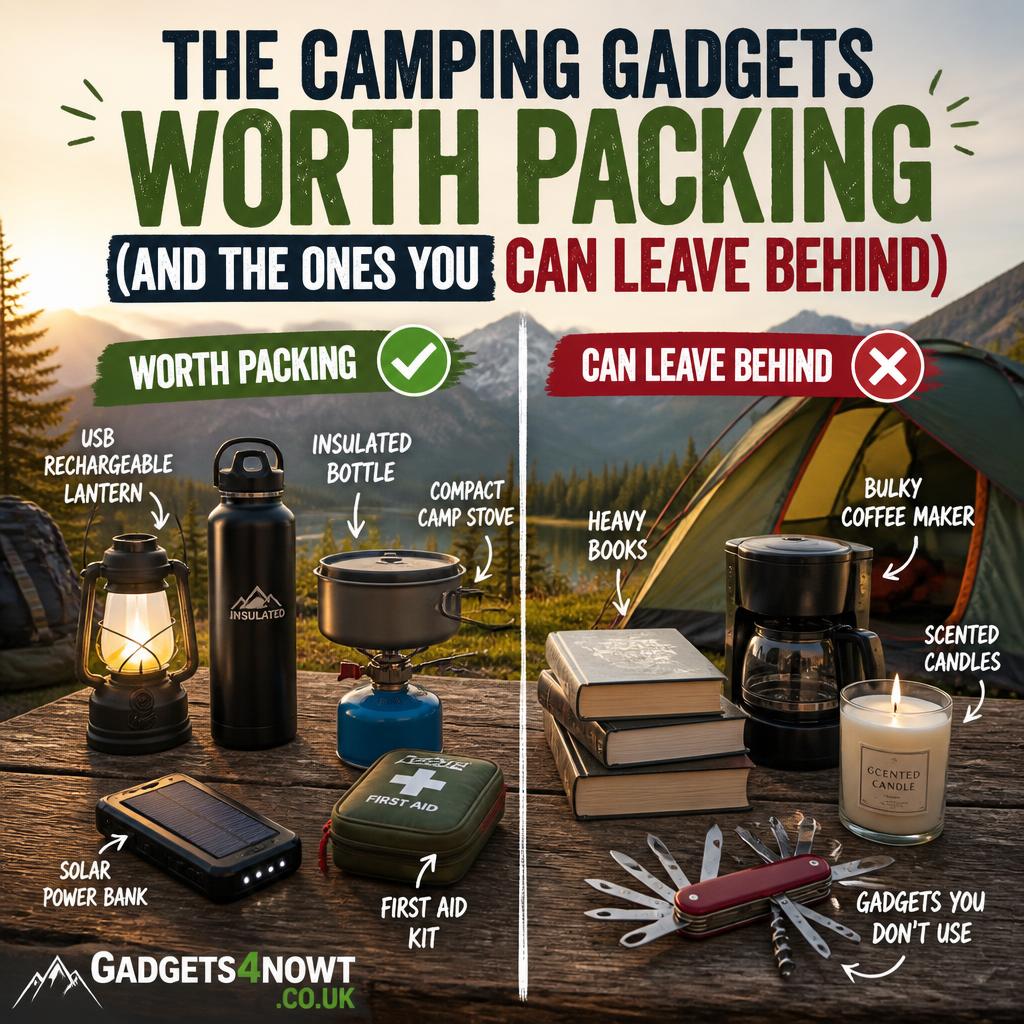
Every serious camper eventually learns the same lesson about camping gadgets: pack weight is the one constraint you can’t argue with. Every extra gadget is extra grams on your back or extra space in the trunk. So the real question isn’t “would this be useful.” It’s “useful enough to justify carrying it 5 miles uphill.”
Rather than a random grab-bag of gear, the picks below are grouped by the actual problem they solve on a trip: power, water, navigation, and comfort. If you’re outfitting a first camping trip, start with whichever category matters most for your style of trip.
Power: the problem every modern camper eventually hits
Phones double as maps, flashlights, and emergency contact devices now. As a result, keeping them charged isn’t optional anymore.
A solar charger is the obvious starting point for multi-day trips. That said, it’s worth being realistic about output — most panels need direct, unobstructed sun for several hours to fully charge a phone. So they work better as a top-up than a primary power source. Pair one with a high-capacity power bank (20,000mAh or higher) for cloudy days.
For longer expeditions or car camping, a small portable power station can run a mini fridge or charge multiple devices overnight. A standard power bank simply can’t do that.
Water: don’t gamble on this one
A portable water filter is one of the few camping gadgets where “nice to have” becomes genuinely necessary once you’re more than a day from a reliable water source. Straw-style filters are cheap and pack small. Pump filters process water faster for group trips. For a deeper look at filtration methods, this overview of water filter types breaks down the science.
If you’re camping somewhere with questionable water clarity, a UV purifier pen is a solid backup. It neutralizes bacteria and viruses in about 90 seconds per liter, though it won’t filter out sediment the way a physical filter does.
Finding your way (and finding your way back)
Phone GPS is fine until you’re out of signal range. That happens fast once you’re off marked trails. A dedicated GPS tracker or satellite messenger solves two problems at once. It keeps you oriented, and in an emergency, it can send your location to rescue services without needing cell coverage.
A traditional compass is still worth packing as a backup. It never runs out of battery, and knowing basic compass navigation is a skill worth having regardless of what tech you’re carrying.
Comfort camping gadgets that punch above their weight
Some gear exists purely to make camp life more bearable. A few genuinely earn their spot in the pack:
- A rechargeable LED headlamp beats a handheld flashlight for anything requiring two free hands — setting up a tent in the dark, cooking, or reading.
- A compact camping stove with a piezo ignition removes the need to carry matches or a separate lighter.
- An inflatable solar lantern folds flat, charges during the day, and provides several hours of ambient light without needing batteries.
- A collapsible camp chair with a built-in cup holder sounds trivial. That is, until you’re the only person standing around the fire.
What to skip
Not every gadget marketed for camping earns its pack space. Electric cooler fans, novelty multi-tools with more than 15 functions, and battery-powered bug zappers are common purchases. Usually, they end up unused after the first trip — either too heavy for the value they add, or replaceable with something simpler you already own.
Building your own camping gadget kit
A practical starting kit for a weekend trip looks like this: solar charger, power bank, water filter, headlamp, and a compact stove. That covers the four essentials — power, water, light, and food — without turning your pack into a gear showroom. If you’re planning a longer trip afterward, our kitchen gadgets guide has a few compact prep tools worth throwing in the cooler bag too.
The best camping gadgets are the ones that disappear into the background of the trip. You barely notice you’re using them because they just work when you need them to.