
Sleep gadgets promise a lot: better sleep, more energy, sharper mornings. Some of that promise is real. A lot of it depends on which specific sleep problem you’re actually trying to fix, since “trouble sleeping” covers a dozen different root causes that need different solutions.
This guide splits sleep gadgets into three timing windows — winding down, during the night, and waking up — because the right gadget depends heavily on when your sleep problem actually shows up.
Winding down: gadgets for the hour before bed
Blue light exposure in the evening delays melatonin release, which is why blue light blocking glasses have become a common recommendation for anyone on a screen late at night. They won’t fix insomnia on their own, but paired with dimmer lighting, they remove one real obstacle to falling asleep on time.
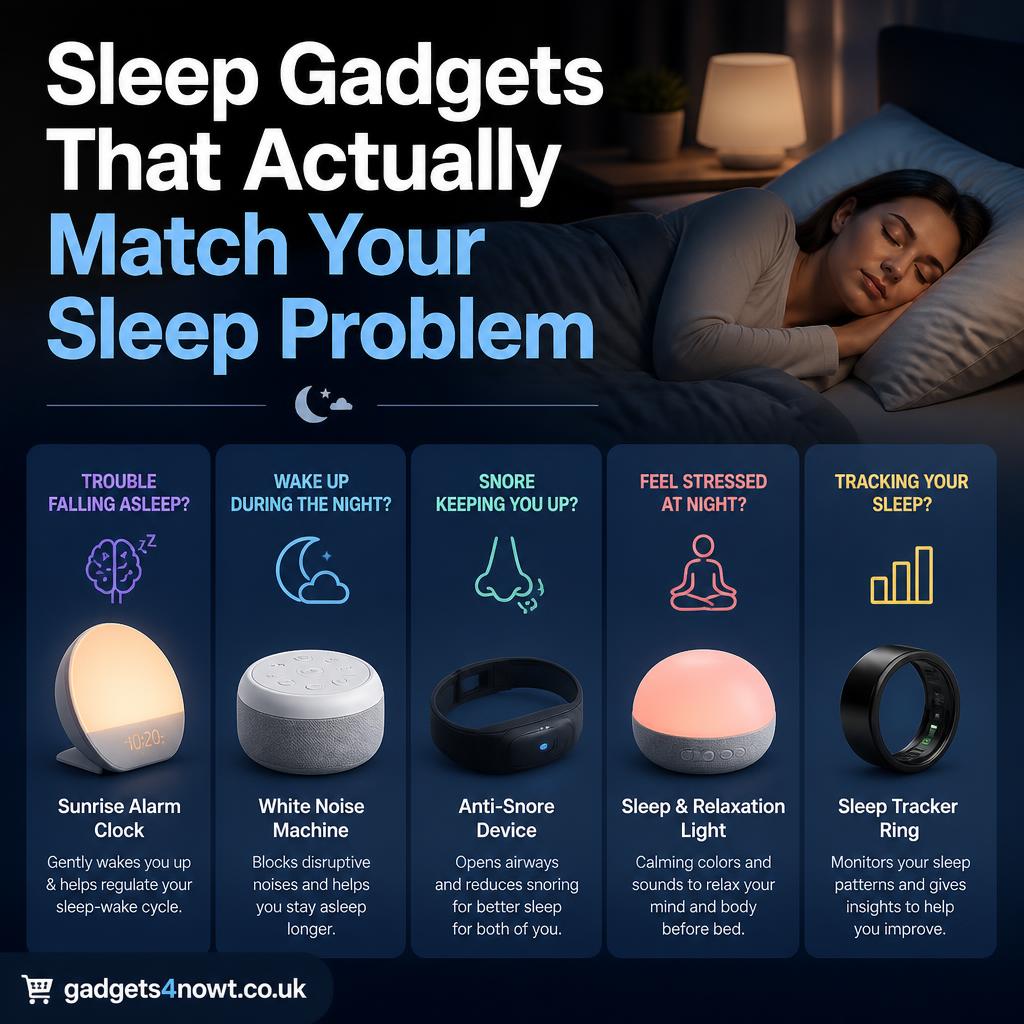
A white noise machine works well for people whose sleep gets disrupted by unpredictable sounds — traffic, a partner’s snoring, a noisy street. Unlike blue light glasses, this one genuinely does the job it promises: consistent background sound masks the sharp, sudden noises that cause the most sleep disruption.
During the night: gadgets that track what you can’t feel
A sleep tracker ring measures heart rate, body temperature, and movement overnight, then translates that into a sleep score in the morning. It’s most useful for spotting patterns over weeks, not for any single night’s reading. A smart mattress pad does something similar from underneath you, and can also actively cool or heat the bed based on your sleep stage.
For people whose main issue is snoring or breathing-related sleep disruption, a basic understanding of sleep apnea symptoms is worth having before buying any gadget in this category — the National Heart, Lung, and Blood Institute’s overview of sleep apnea is a good starting point, since some symptoms need a medical evaluation rather than a gadget fix.
Waking up: gadgets that fix a bad morning, not a bad night
A sunrise alarm clock simulates a gradual dawn instead of a jarring beep, which research links to easier, less groggy waking. It’s a small gadget, but for anyone who wakes up before actual sunrise for months of the year, the difference is noticeable within the first week.
A smart alarm that tracks sleep cycles and wakes you during a lighter sleep phase — rather than a fixed time — is another gadget aimed specifically at reducing that groggy, disoriented feeling some people get from being woken mid-deep-sleep.
What sleep gadgets can’t fix
None of these gadgets replace consistent sleep habits, and none of them diagnose an underlying sleep disorder. If a sleep tracker consistently shows fragmented, low-quality sleep despite good habits, that’s a signal to talk to a doctor, not to buy a different gadget. Gadgets work best as a layer on top of good habits, not a substitute for them.
Building a simple sleep gadget setup
A reasonable starting point: blue light glasses for the evening, a white noise machine for the room, and a sunrise alarm for the morning. That covers the three windows above without turning your bedroom into a lab. If your evenings also need a way to wind down mentally, our guide to meditation gadgets pairs naturally with this setup. Add a sleep tracker later, once you know your habits are already solid and you’re curious about the data rather than trying to fix a problem.