
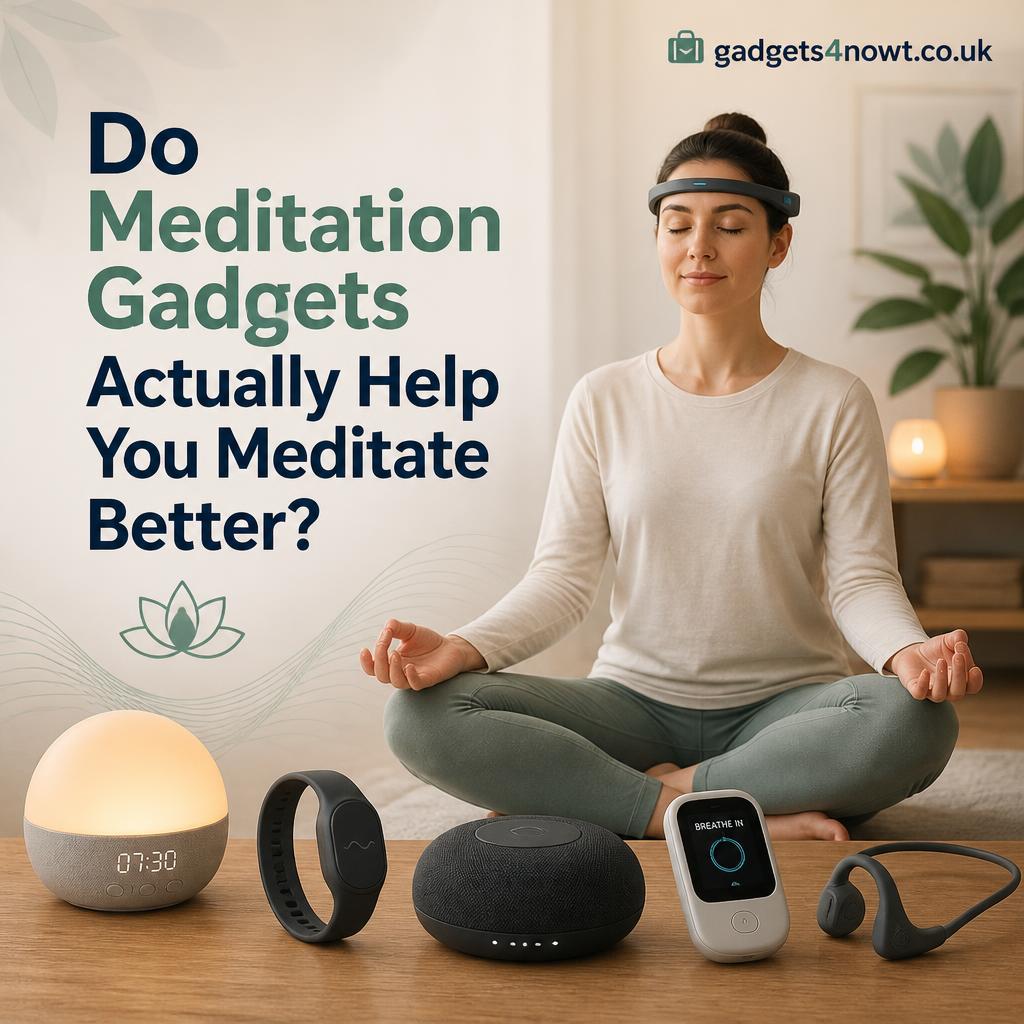
Meditation gadgets are everywhere now, but meditation itself has existed for thousands of years without a single piece of electronics involved. So it’s a fair question: does strapping on a $200 headband actually make you better at sitting still and breathing? The honest answer is that it depends on what you’re struggling with.
Meditation gadgets generally solve one of three problems. They give you feedback on what your mind and body are actually doing. They remove distractions. Or they guide you through a practice when you don’t know where to start. Understanding which category a gadget falls into is the fastest way to figure out if it’ll actually help you.
Feedback devices: seeing what you can’t feel
The biggest challenge for beginners is not knowing whether they’re “doing it right.” An EEG headband measures your brain’s electrical activity in real time and translates it into audio cues. Calmer brainwaves might sound like quiet rain, while a wandering mind sounds like a storm. It’s essentially biofeedback — instead of guessing whether your mind has drifted, you hear it happening. For the science behind this, this explanation of biofeedback covers how the feedback loop works.
Heart rate variability (HRV) trackers work on a similar principle but measure your nervous system instead of your brain. A rising HRV score during a session is a reliable sign your body is shifting out of stress mode. That makes them useful for people who meditate specifically to manage anxiety and want measurable proof it’s working.
These devices work best for analytical people who meditate better when they have data to interpret. However, they’re less useful — sometimes counterproductive — for people who already meditate consistently, since checking a score mid-session can become its own distraction.
Environment control: removing the excuses
A huge percentage of “I can’t meditate” complaints actually come down to environment, not technique. A white noise machine masks the small sounds that pull attention away during silent practice, like traffic or a ticking clock. A weighted blanket applies gentle, even pressure that’s been shown to lower cortisol and ease the restlessness some people feel when sitting still for the first time.
Neither of these teaches meditation. Instead, they just remove friction, which for a lot of beginners is the actual barrier standing between them and a consistent practice.
Guided practice tools
Standalone guided meditation devices are screen-free speakers preloaded with sessions. They exist specifically for people who don’t want to meditate while staring at a phone screen, which somewhat defeats the purpose of the exercise. A breathing trainer uses light, sound, or gentle vibration to pace your inhale and exhale. That’s useful for techniques like box breathing, where timing matters more than intuition.
When meditation gadgets help — and when they get in the way
Gadgets tend to help most in the first few months of a meditation practice, when structure and feedback matter for building the habit. However, they tend to matter less — and can even become a crutch — once meditation becomes routine. Long-time practitioners often report that the goal eventually becomes sitting without needing a device to confirm they’re doing it correctly.
A reasonable approach is to use a feedback or guidance gadget for the first 60–90 days to build consistency. Then, try a few sessions without it. If your practice holds up unaided, the gadget did its job. If you feel lost without it, that’s worth noticing too.
What to actually look for before buying
- Battery life — a device that needs daily charging becomes friction, not a solution.
- Screen-free operation, if the goal is reducing screen time rather than adding another app.
- Data you’ll actually check — detailed brainwave analytics sound impressive but are wasted on someone who just wants a quiet nudge to sit down and breathe.
The bottom line on meditation gadgets
Meditation gadgets aren’t a shortcut to enlightenment, and none of them replace the actual practice of sitting down and doing the work. What they can do is remove specific, real obstacles — noise, uncertainty, restlessness — that stop people from starting in the first place. If stress management is the real goal, our guide to home office gadgets covers a few desk-friendly tools for staying calm during the workday too. Pick based on which obstacle is yours, not based on which gadget has the best marketing.